Member Stories
Vanessa Leman, MIT
"We're a small group, but we're a mighty group."
Martijn Brinkhuis is a Consultant Clinical Psychologist & Neuropsychologist and APEX delegate at Te Whatu Ora, Waikato.
Where do you work and what do you do?
I work as a clinical psychologist and neuropsychologist for Health New Zealand/Te Whatu Ora in the Waikato, at the mental health service for older people. My core activity is psychological therapy with our older clients. I’m based in Thames and cover a great part of the Waikato area. I would say about 80% of my client contacts are home visits. It’s quite a stretched patch – I’m on the roads a lot!
And what are the mental health issues for older people that you work with?
Quite diverse. Depression and anxiety is what we see most, but definitely PTSD, personality disorders and grief as well. Part of my role is also to do neuropsychological assessments if there are questions about cognitive decline.
What does a good day for you look like?
Get into the office, have a quick catch up with my colleagues, collect the keys of the fleet car, and do 2 or 3 home visits, depending on the area I need to be in. While I’m on the road, doing my notes and have lunch at a nice spot. Probably have a meeting early in the afternoon, like a virtual MDT or professional meetings about a client. Then at the end of the day, get back in the office and wrap things up and finish my notes. That’s a really good day.
How did you end up becoming a psychologist?
When I was in my late teens, I thought I wanted to be a physiotherapist, so I went to a few open days for the study of physiotherapy, and they were saying that part of the training was about psychology as well. And I thought, hmm, that’s really interesting. So I looked into that deeper, and I thought, no I need to study psychology. I always liked to work with people, liked to help other people. In the early stage of my study it became clear to me that I was really interested in working with older people. Because they already have a lifetime experience, because of the interaction between physical problems and mental health problems such as through cognitive decline, and the existential questions that many older people struggle with.
How did you end up working in New Zealand?
I had been to New Zealand twice before, the second time with my family, and we fell in love with it. So, we came in 2017 here from the Netherlands. It’s a great experience to have immigrated with my family, that’s a big life experience. Because English is not my first language, the first few years was a bit of a struggle. But I really enjoy working as a psychologist in New Zealand.
How did you get involved in APEX as a delegate?
I contacted APEX for advice around the fifth week of annual leave as there was an unresolved issue for recognising service. It was a good experience to work with APEX, and I think it is really important to have that link directly between psychologists and an Advocate who is representing us.
And in the last bargaining we were able to clarify that clause, to ensure all service as a psychologist, including service overseas, is recognised for annual leave?
I was happy to see that finally sorted. And I think that is what it is about to be a delegate and part of the bargaining team. I had missed out on that recognition but it is really great to see we have fixed this for the future psychologists coming to Health NZ/Te Whatu Ora, whether it’s from a different organisation within New Zealand or coming from overseas. I think that’s a really good example that as a delegate in part of the bargaining team, you’re not just there for yourself, but you’re representing all psychologists for Te Whatu Ora.
What’s your experience been of being on psychology bargaining teams?
I’m not sure if enjoyed is the right word, but I find it really interesting to be part of it. As a psychologist, the dynamics around the table are interesting. I think as a delegate, although we don’t do the actual bargaining bit, our input is definitely valuable.
What I learned really from last bargaining is how it’s not just bargaining between the union and Health NZ/Te Whatu Ora, but the political and the financial landscape has a huge influence on what goes on as well.
“The Political and Financial Landscape has a Huge Influence on Bargaining”
What would you like to see APEX focus our energy and attention on, in terms of the psychology profession, between now and the next negotiations?
Workplace facilities is a really important one. I was really pleased to see APEX’s survey about working in rural areas and rural hospitals. Sometimes the facilities are poor. Not enough clinic rooms or clinic rooms with thin walls. Second, having a plan for recruiting and retaining psychologists – that’s a big issue. We still have too many vacancies for the psychology workforce in Health NZ/Te Whatu Ora. That gives us a huge pressure on our caseload and waiting lists.
What do you enjoy doing when you’re not at work?
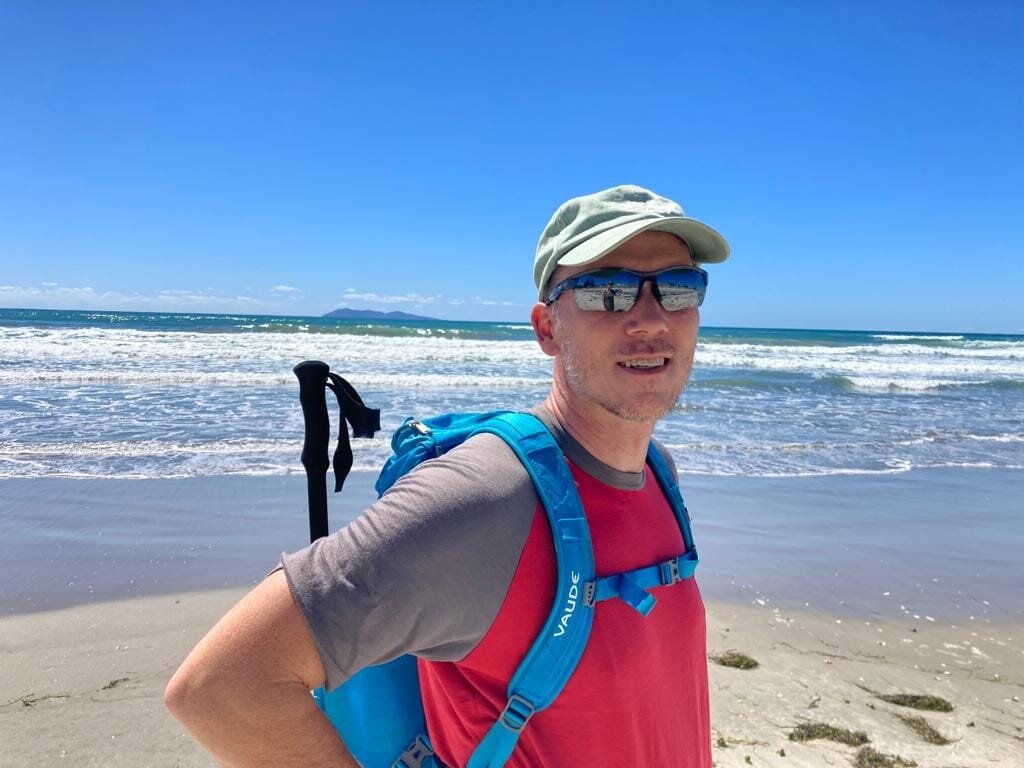
I really enjoy tramping, and it was one of the reasons for us to move to New Zealand. I went up Mount Te Aroha recently and in the Coromandel ranges before Christmas. Spending time with family, gardening and just pottering about at home with our dog and six chickens!