Member Stories
Susie Perniskie, Radiographer and Sonographer
"In a small hospital, you have to think on your feet"
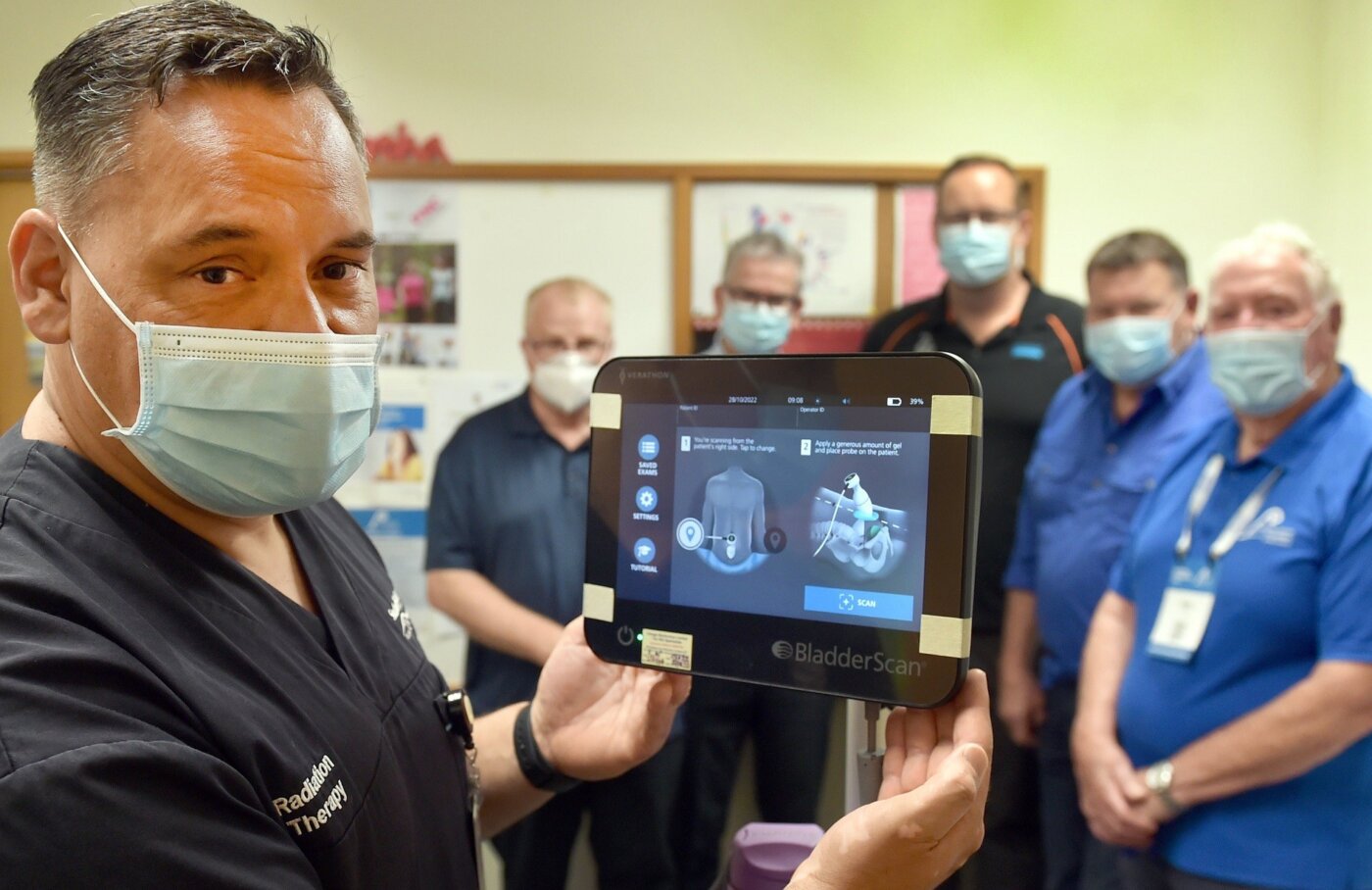
Andre Aumata is an advanced practice Radiation Therapist in Dunedin, Southern – one of the five current advanced practitioner RTs in Te Whatu Ora. APEX currently has claims in RT bargaining to lift the number of RT advanced practice roles employed across the system by 8.5 FTE.
Where do you work and what do you do?
I currently work at Dunedin’s radiation oncology department, and my role is an advanced practitioner radiation therapist specialising in prostate cancer care. It is basically about making prostate cancer treatment smoother, safer, but also more consistent, for both the patient, radiation therapists and the wider multi-disciplinary team. I sit right in the middle of clinical practice, service improvement, education and research. That lets me bridge gaps that normally slow things down.
What does a day at work look like for you?
On the clinical side I am hands-on right from the start. I see the patient prior to the first specialist assessment with the radiation oncologist. I assess patients’ lower urinary tract symptoms (LUTS) and use updated scoring tools to evaluate bladder and bowel function. I review co-morbidities such as diabetes, cardiac, or respiratory issues, along with medications that may influence bladder or bowel function. I also assess hydration and bowel habits and complete a G8 frailty screening score.
It’s like a warrant of fitness to basically get the patient better prior to being seen by their radiation oncologists. The idea is to pick up issues early before they become barriers at pre-treatment CT planning scan, or during treatment. And by the time they reach the radiation oncologists, they’ve pretty much been triaged and already set up with a prep plan.
Then throughout planning and treatment, I run on-treatment reviews, look out for toxicity, bladder/bowel consistency, functional issues… and I intervene early. That’s meant fewer delays, fewer re-plans, and just a smoother run for patients.
Is it working?
It makes a difference for sure. For radiation therapy, prostate patients in particular, preparation is everything. You need a reliable bladder; ensure their bowels also reliable for the volumes we want to achieve. When you look at how radiation therapy is progressing, it’s become so advanced especially with IGRT and hypofractionation – we’re using a lot higher doses per treatment in a shorter treatment regime – so less treatments, but higher dose. We’re trying to replicate accuracy every day. If accuracy drops the patient will feel it, they’ll possibly get earlier side effects. And if we’re having a patient with side effects, who can’t complete their treatment requirements, or it’s not accurate on the treatment, then the system feels that – we have delays. My role is to keep these patients on track. So, their planning and treatment is more stable, and their treatments run without any interruption. It is huge for that patient’s confidence. And the ROs get shorter, smoother FSAs because the groundworks already done.
How did you find the transition to from RT to APRT?
The transition itself was straightforward because I was working towards an APRT over in the UK, as a urology specialist. The role has certainly changed with a lot of quality improvement and leadership. So, outside the day-to-day clinical work I am constantly trying to tighten up pathways – revising protocols, standardise practises across teams. We’re reducing variation, wherever possible. Study cycles – test it, measure, refine it. Little by little, any steady improvement, it adds up quickly. I am helping build more capability around patient assessment, working closely with radiation therapy, nurses, our physics department, radiation oncology, and urology now, the aim is to keep those workflows aligned. And now the other aspect of this role is research and innovation. A national hydration guideline for prostate patients. Updating guidelines LUTS tools like EPIC-26/IPSS to make them more clinically meaningful. Also with bowel toxicity scorings, what I’ve done is matched what our department actually sees and does, with clear escalation triggers, practical actions. What we are seeing is an improvement on monitoring and identification or progressive side effects.
Has there been much discussion or planning about where additional RT advanced practice roles could grow into in the Dunedin department?
I worked in the UK for 12 years. I saw the transition to advanced practitioners, consultant practitioners. They use breast and head and neck advanced practitioners. We have a colleague here in Dunedin, Nicky Gray, and she’s a skilled and experienced radiation therapist who is our breast care specialist. She’s recently done her master’s with me and is basically ready to go for an advanced practitioner role for breast care. The other one would be head and neck, which works really well. With head and neck that as an advanced role is a very in-depth role, one which suits a role in RT, it’s our bread and butter, this is what we are trained for. Hopefully, breast is the next role off the cab and would be a great one if they got introduced.
What are the challenges and opportunities of the APRT role?
Always trying to define those boundaries within the wider multi-disciplinary team. It’s also balancing that clinical work with research and education. But there are opportunities to align pathways nationally. So, if we grow APRT roles across other tumour streams, then we’re strengthening that equity of work. We’re building a more standardised advanced practice framework across New Zealand. It does lift the overall standard of prostate cancer care. It can ease the pressure on the workforce, and it gives the patients better support. So, it raises both the minimum standard and the maximum potential of the service.
“It Lifts the Minimum Standard and the Maximum Potential”
And that’s what keeps me excited about the role. It’s making a real difference now. If more APRT roles can be introduced across the motu then our standard of care for patient and service will be greatly enhanced and that would be great.